
Pocatello Previous Residents by Era
No single source spans the life of a Pocatello address. Modern deeds establish ownership, while directories and census schedules can identify occupants. Maps, permits, newspapers, and probate files add dates and context. Use each record for the point it can prove.
| Local source | Years or coverage | Where held | What it shows |
|---|---|---|---|
| Scanned land records | Created since 1999 | Bannock County Clerk/Recorder | Transfers and legal descriptions |
| U.S. Land Office Records | 1892-1927 | ISU Oboler Special Collections | Early deeds, claims, names, and land descriptions |
| Polk and telephone directories | Selected runs, 1901-2001/02 | State and university collections | Name, address, work, and continuity |
| Sanborn maps | 1892, 1900, 1907, 1915, 1921, 1948; Old Town 1963 | Library of Congress and district studies | Footprint, use, number, and lot context |
| Federal census | Released schedules under the 72-year rule | Federal and archive channels | Household on one census date |
| Local newspapers | 1895-present | Marshall Library and digital archive | Moves, notices, obituaries, and civic ties |
| Probate papers | 1893-1971 | Courthouse and FamilySearch reels | Estate, heir, guardian, and address clues |
Overlap makes the result sound. Two independent sources placing one person at the same property in a close date range are far stronger than an undated name hit from any source.
Freeze the Pocatello Parcel Record
Begin with the Bannock County Assessor and Parcel Viewer. Save the inspection date with Parcel_PIN, PARCEL_NO, SitusAddress, LegalDescription, OwnerName, and both mailing-address groups. Values can change, so a dated snapshot keeps the first link clear.
The public layer also exposes DEED and OLD_DEED fields. They are leads, not substitutes for the recorded instrument. A mailing address may differ from the physical site, and an owner name does not identify all previous residents. Keep the legal description because it can survive a street-name change, lot split, or parcel merger.
Copy the parcel facts exactly as displayed. Do not shorten the legal description or merge the two address groups in a note. If the map and tax fields appear to conflict, record both and ask the Assessor which field reflects the current roll. The Assessor can explain parcel data, while the Recorder confirms the legal instrument. That division of custody prevents a map label from being treated as a deed and helps the next researcher reproduce the same Pocatello previous-residents trail.
Trace Pocatello Resident Owners Backward
The Bannock County Recorder keeps the deed chain. County guidance says land records created since 1999 are scanned and viewable. The Tyler index starts behind an acceptance screen, and its exact older cutoff was not documented. The counter and written request route remain important.
- Record the current owner, parcel numbers, and legal description.
- Request the current acquisition deed and its document number or book and page.
- Read the grantor, grantee, date, land description, and prior-instrument reference.
- Search the seller as an earlier grantee for the same land, then repeat.
- Beyond the scan horizon, use courthouse books, microfilm, ISU, or State Archives.
- Grantor
- The party transferring an interest.
- Grantee
- The party receiving it.
- Chain of title
- The linked sequence of transfers for the same land.
- Legal description
- The lot, block, subdivision, or survey wording that identifies land apart from a mailing address.
Open the Recorder source before requesting a deed image or certified copy.
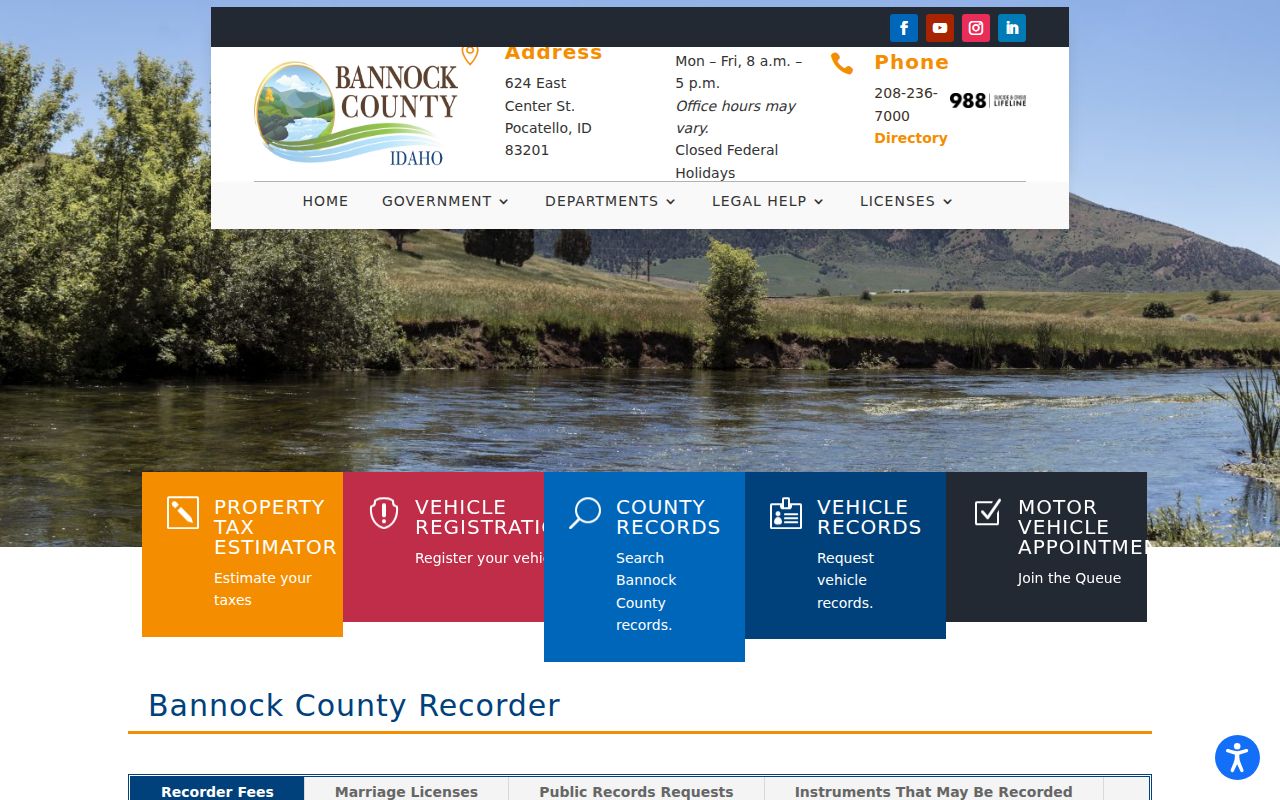
The office page confirms the custodian that connects a parcel lead to the underlying instrument.
Pocatello Records Before 1999
The county's 1999 statement is an imaging marker, not a claim that earlier deeds vanished. At the Tyler Self-Service disclaimer, the county calls its index a guide like a library card catalogue. It also tells searchers to try spelling variants and warns that data can change.
Review the Self-Service disclaimer before searching.
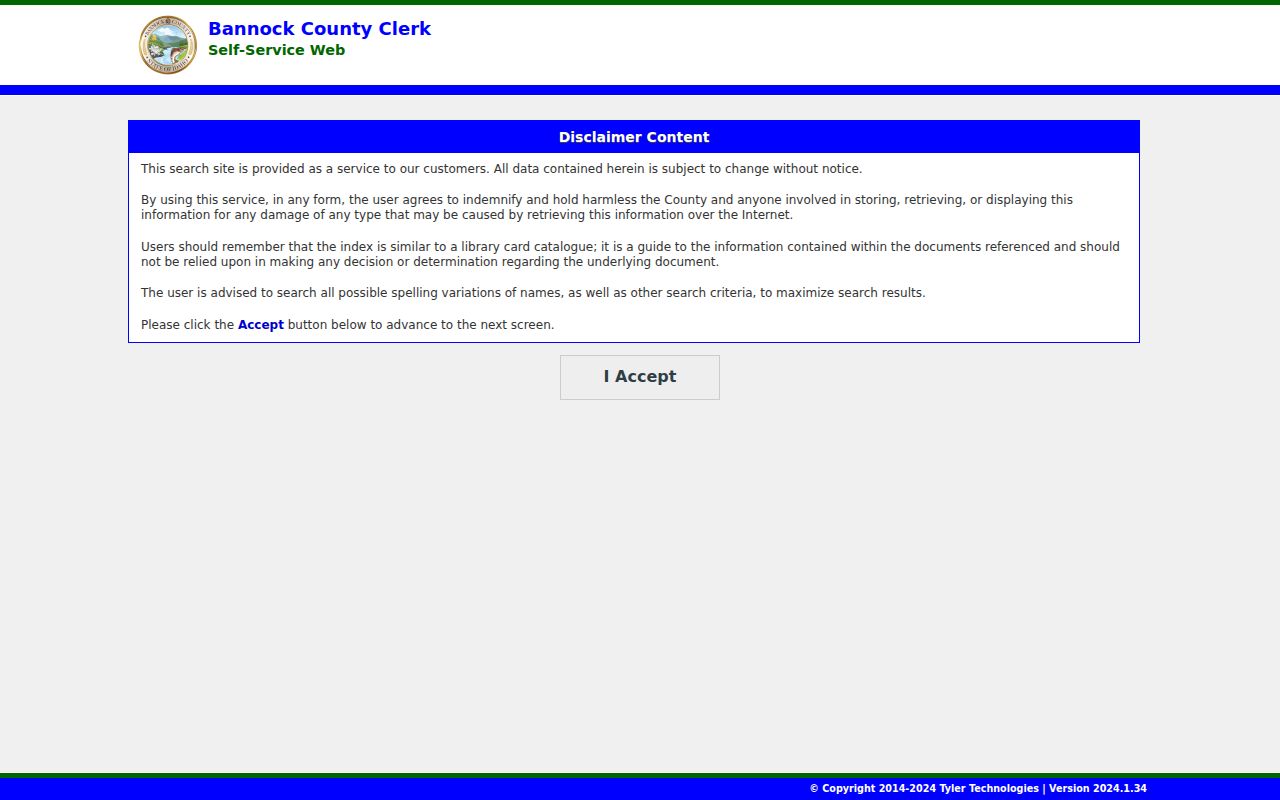
If an older link does not appear, call the Recorder at 208-236-7340, visit Room 211 at 624 E Center Street, or submit the county records form. Give the legal description and a date band, not just one spelling of a name.
Pocatello's 1901 Street-Name Break
Ordinance 89 is a local search trap. Historic-district studies say it passed May 21, was approved May 22, and was published May 23, 1901. An address in a directory or newspaper on one side of that change may not match today's street label.
Bridge the gap with the legal description, a Sanborn sheet, and both versions of the street name. Railroad growth and annexation can add more mismatches. This local quirk often explains why a sound name search returns nothing.
Date a Pocatello Resident Address
Sanborn fire-insurance maps document local editions from 1892 through 1948, plus an Old Town 1963 edition cited in district studies. The Library of Congress holds a public-domain May 1921 set of 37 sheets. A sheet can show footprint, street number, use, and lot setting, though it does not name each occupant.
Pocatello eTRAKiT adds current active, closed, and expired permit records through an address route. It launched July 30, 2024; the historical backfile cutoff was not stated. Pair a permit with deeds and maps. An applicant is not automatically a past resident.
A good map comparison uses the nearest sheet before and after a known deed date. Note changes in numbering, footprint, additions, and building use. Then check a directory or newspaper from the same short period. If a structure appears on one map but not the earlier sheet, that brackets a physical change without proving its exact construction day. City permit records can tighten the range for modern work. For old Pocatello addresses, district nominations and archive files may explain the change when the permit portal cannot.
Match Pocatello Resident Directory Years
Ownership answers only half the question. Place one city or telephone directory year before and after each deed transfer, then compare the closest released census schedule. Collection details belong on the Pocatello city directory page; in this workflow the volumes act as dated occupancy evidence.
- Write each owner interval from the deeds.
- Check the address and surname near both ends of that interval.
- Compare the household in a released census, noting its one enumeration date.
- Test adjacent years for moves, initials, and street abbreviations.
- Confirm with a newspaper, map, permit, or probate record.
No distinct public Pocatello criss-cross series was confirmed. Ask the holding library whether an address-first arrangement exists before planning a visit.
Marshall Finds Past Pocatello Residents
Marshall Public Library offers local research help, though no separate house-history guide was found. Send an address, date range, known names, and one precise question. For an obituary request, staff ask for the full name, death date, burial place if known, contact details, and a deadline.
Open Marshall Library's research request to frame the inquiry.
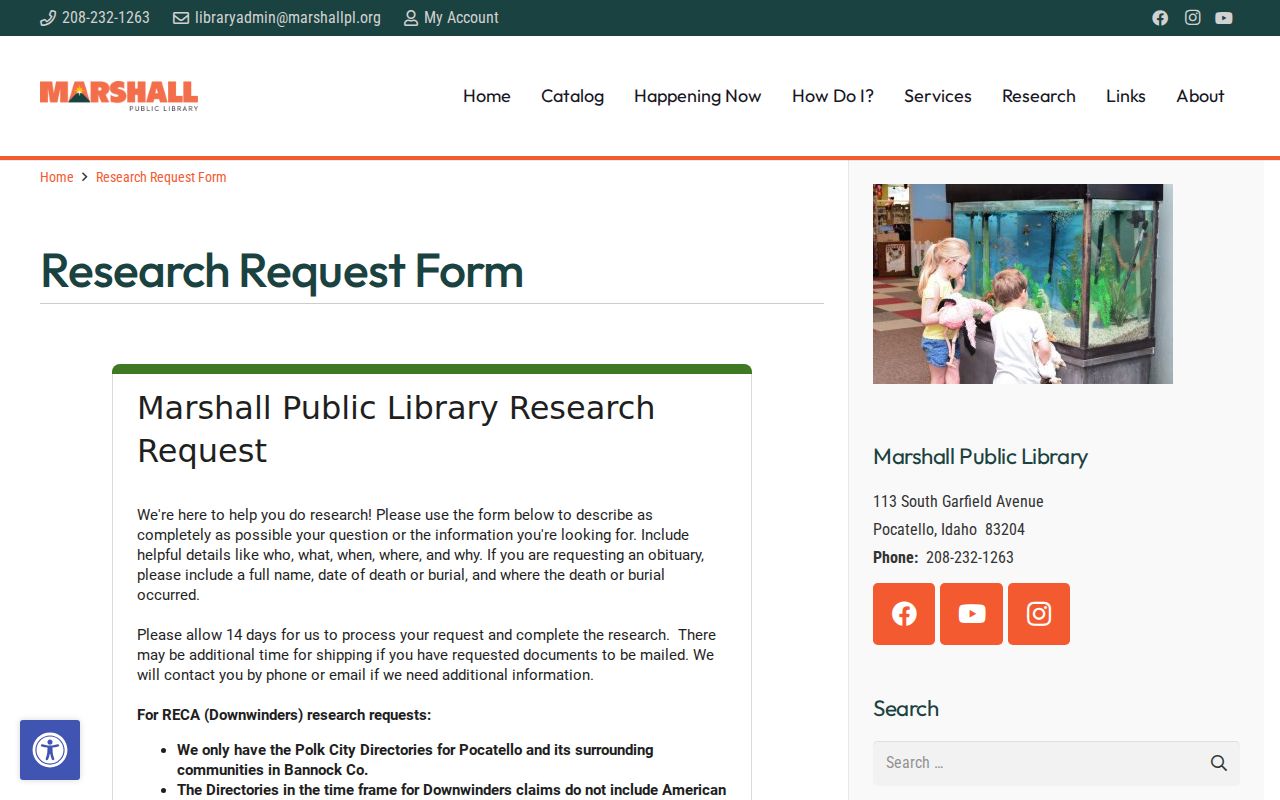
The request works best after the deed chain supplies a surname and narrow span of years.
Early Pocatello Resident Land Names
ISU Oboler Special Collections holds U.S. Land Office Records with Pocatello deeds and claims from 1892 to 1927. This source can carry family history beyond the modern scan era. Materials are noncirculating, and copies depend on copyright, privacy, donor limits, fees, and staff review.
Other ISU leads include the Owens downtown papers, Kasiska family real-estate papers, Rowland photographs, and Bannock County Images. They are collection-level sources, not instant lists. Contact the archive with a name, land description, street, and date span.
The Bannock County Historical Museum is another in-person route. Its collections staff asks researchers to arrange access at least two weeks ahead, complete the required paperwork, and obtain approval. That lead time makes a precise request useful. State the address, both known street names, the parcel description, and the decade. Museum themes include railroad history, local printing, farming, photography, and military life, all of which can place a house or family in a wider Pocatello setting without turning a subject lead into a claim about residence.
Close a Pocatello Resident Trail
Newspapers and probate may explain why a name leaves an address. Marshall's Pocatello Tribune microfilm spans 1895 to 1949, while Idaho State Journal coverage continues from 1949 to the present. Search names, old street forms, legal notices, and groups. Inspect the page image because OCR often misreads initials.
Bannock probate and guardian papers cover 1893 to 1971 in 33 FamilySearch reels, with originals at the courthouse. Some images have limits. An estate file may link a person, heirs, and land, but no current public estate-name portal was found.
When the catalog image is restricted, use the access chain instead of abandoning the search. Check iCourt for a searchable case, ask the District Court clerk about the judicial request form, and give the case name or number when known. For the older reels, note that a catalog entry describes a collection and does not guarantee remote image access. A clerk response, archive citation, or clear negative search note belongs in the research log beside each previous-resident name.
Check the Bannock probate catalog for access notes.
Use probate to close a dated chain, not to replace deed and address evidence.
Use records with care. Research previous residents for house history, family history, or an estate question. Never use an address trail to watch, harass, or harm a living person.